Quadruple Helix Impact: A Remarkably Active Month for the IT Didactics Research Group
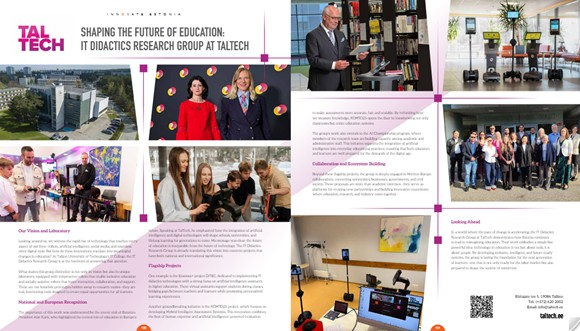
Over the past month, the IT Didactics Research Group has demonstrated an exceptional level of activity, impact, and visibility across all dimensions of the Quadruple Helix—academia, industry, policy makers, and society. Our team engaged in major international conferences, strategic roundtables, policy dialogues, international development projects, and research-focused seminars, while also contributing to the development of next-generation AI-supported teaching and assessment practices. Below is a consolidated overview of our key achievements.
AI Retreat 2025: A Landmark Event With 150 Participants
We are proud to announce that the AI Retreat gathered approximately 150 participants, including researchers, educators, PhD students, and industry experts. The event featured multiple tracks dedicated to AI in education, digital transformation, and learning innovation.
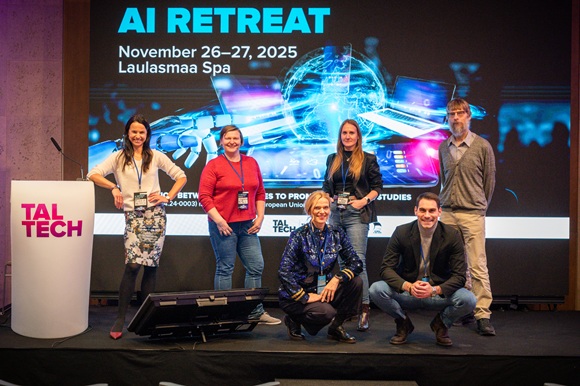
The retreat was jointly moderated by Prof. Janika Leoste and Prof. Slavko Rakić, who also delivered workshops on:
• Hybrid Intelligent Assessment Systems (HIAS)
• Using AI in research, teaching, and academic workflows
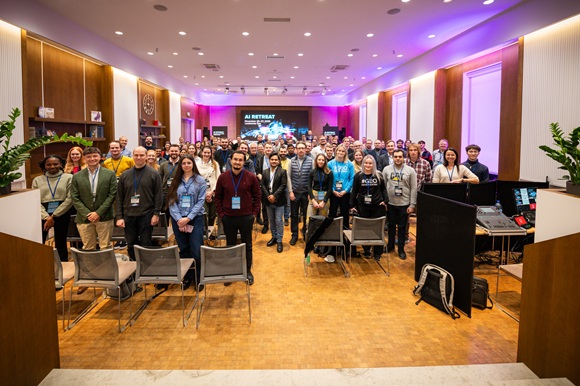
Our PhD student Tiina Kasuk served as a member of the organizing committee, supporting the event’s successful implementation.
Policy Makers & Digital Education: Presence at the DigiEduHack Main Stage in Brussels
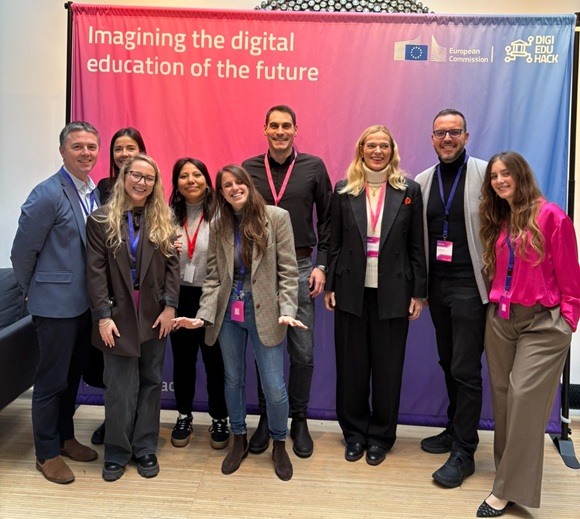
In the same month, Prof. Leoste and Prof. Rakić represented our research group at the DigiEduHack Main Stage Event in Brussels.
They contributed to two expert discussions on the future of digital education, AI ethics, and innovation ecosystems.
The event was officially opened by: Pia Ahrenkilde Hansen Director-General, DG Education, Culture, Youth and Sport (European Commission)
Their participation strengthened the visibility of TalTech’s leadership in shaping European digital education policy.
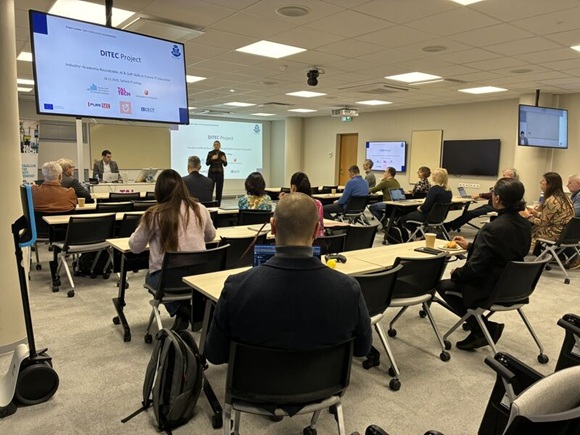
Academia–Industry Collaboration: DITEC Project Roundtable
Within the framework of the ongoing Erasmus+ DITEC project, a high-level roundtable between academia and industry was organized by:
• Kristel Marmor
• Voldemar Tomusk
• Janika Leoste
• Slavko Rakić
The roundtable resulted in the creation of seven company case studies, which will be integrated into our curriculum to bridge the skills gap and better prepare students for modern IT roles.
New International Development Project: ESTDEV Gap Analysis for Kenya, Nigeria, and Armenia
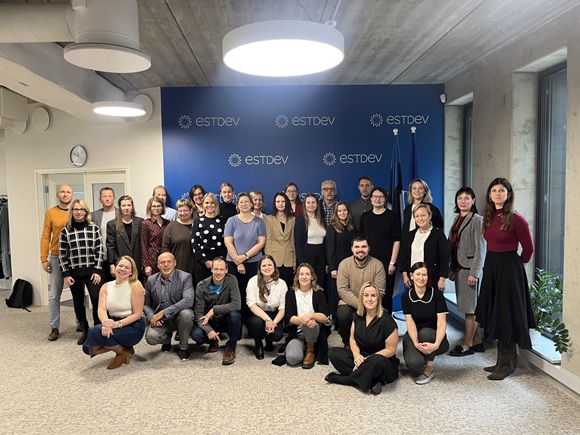
A new project funded by the Estonian Centre for International Development (ESTDEV) was officially launched this month: “Gap Analysis of Kenyan ICT Higher Education and Labour Market Needs with Comparative Reflections on Nigeria and Armenia.”
The project aims to analyse digital and ICT competency gaps between university curricula and labour market demands in emerging economies.
As part of the project’s initiation phase, Voldemar Tomusk visited several universities in Kenya to begin the skill-gap assessment and establish collaboration with academic and industry stakeholders. This marks an important expansion of our research group’s global development footprint and reinforces Estonia’s role in supporting digital capacity building worldwide.
Scientific Impact: International Conference Contributions
18th International Conference of Education, Research and Innovation (Seville) Our group made strong contributions through two conference papers:
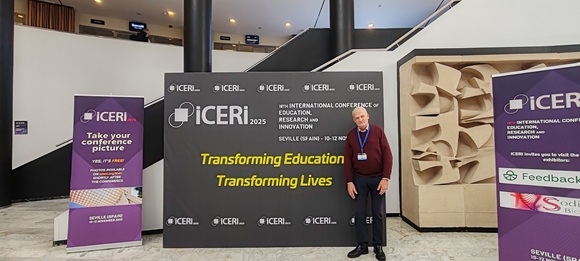
• Prof. Jaanus Pöial Artificial Intelligence in Self-Regulated Learning: A Cross-National Pilot Study of Estonia and Serbia
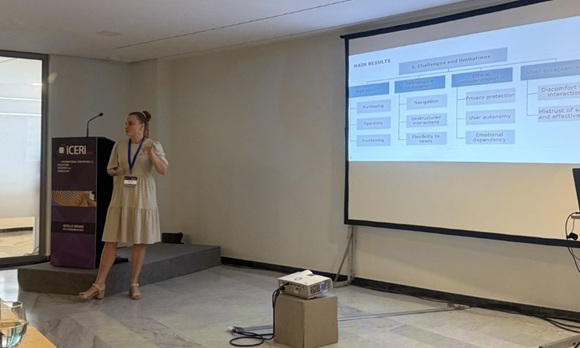
• Maarja-Liis Elland A Systematic Review of Socially Assistive Robots in Elderly Care: Integration, Benefits, and Challenges 2nd International Conference on Trends and Challenges in Digital Education
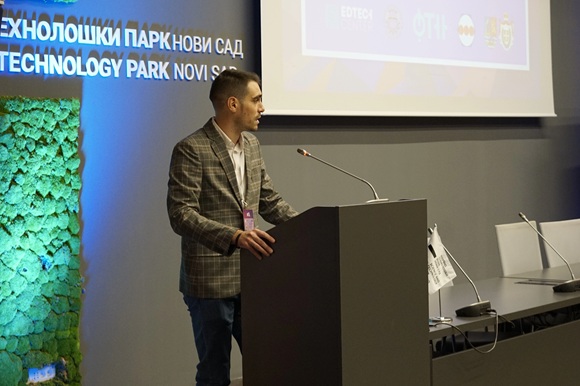
At the 2nd DETC conference, Prof. Slavko Rakić presented two papers:
• Hybrid Intelligent Assessment: Building Inclusive and Ethical Learning with AI
• Reimagining IT Education Through AI and Design Thinking: Bridging Digital and Human Skills in Higher Education
Research & Society: Future of Ageing Seminar
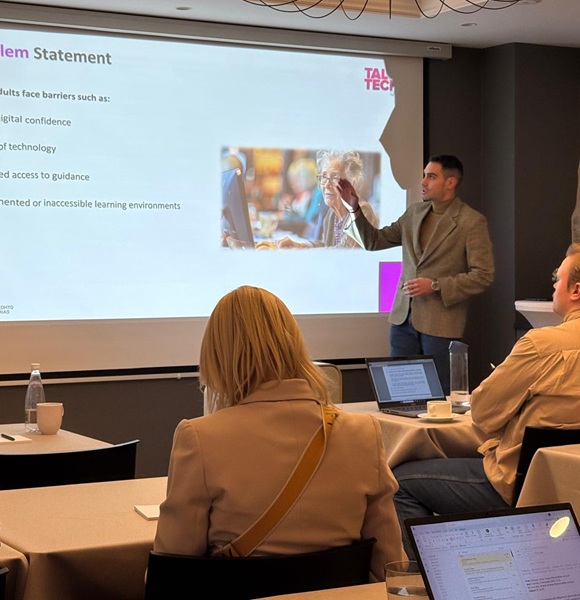
Our researchers—Prof. Leoste, Prof. Rakić, and Joosep Parts—presented at the seminar:
“Digital Routines, Creative Practices – Eyes on the Future of Ageing” hosted by the University of Jyväskylä.
Their discussions explored how AI-supported learning environments can enhance inclusion, wellbeing, and digital participation among older adults.
Looking Ahead: December Workshop and ChatGPT EDU Rollout
The month of December begins with a new workshop focused on the implementation of AI in teaching and learning. Additionally, all TalTech professors and lecturers have now received access to the paid ChatGPT EDU version, enabling more advanced, responsible, and pedagogically grounded use of AI across university courses.
For conclusion — read more in INNOVATE™ Estonia
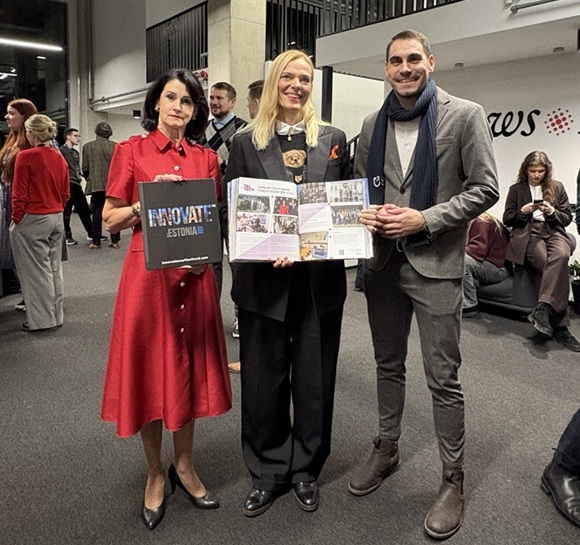
For conclusion, we are proud to note that our IT Didactics Research Group is featured in the latest edition of INNOVATE™ Estonia, a publication that showcases pioneering Estonian innovation and digital transformation.
You can learn more about our contributions, as well as the broader Estonian innovation ecosystem, by exploring the book here: https://innovationsoftheworld.com/ecosystems/innovate-estonia/
We hope our ongoing work — from AI-supported teaching and assessment, to international cooperation and global capacity-building — continues to highlight Estonia’s role as a leader in educational innovation and research.